


How to Start a Photography Business: A Complete Guide
Are you a passionate photographer dreaming of how to start a photography business? If so, you're in the right place! Starting your own photography business is a journey filled with excitement, creativity, and growth. In this comprehensive guide, we'll walk you through the essential steps to launching your dream photography business with a focus on what matters most: your creativity, your clients, and your long-term success.
1. Find Your Niche: Define Your Photography Style
The first step in how to start a photography business is defining your niche. Think about the type of photography that makes your heart sing, whether it's weddings, portraits, family sessions, product photography, or events. Choosing a niche helps you:
- Stand out in a competitive market
- Attract the right clients
- Specialize in a specific area of photography that you truly enjoy
Remember, your niche should reflect your passions and talents. It will guide your marketing efforts, your pricing strategy, and the kinds of clients you want to work with. Trying to be everything to everyone often makes it harder to stand out, while a clear niche gives potential clients an immediate reason to choose you.

2. Create a Solid Business Plan
A strong business plan is your roadmap to success. It will help you stay focused, organized, and clear on your goals. Key elements to include in your business plan are:
- Services: What photography services will you offer? (e.g., engagement shoots, corporate headshots, maternity photography)
- Pricing: Set competitive yet sustainable prices for your services based on your niche and target audience.
- Target Audience: Define your ideal clients. Who are they, and where can you find them?
- Marketing Strategy: How will you promote your business? Consider social media, word-of-mouth, and collaborations.
- Financial Projections: Outline your startup costs, expected income, and financial goals.
The more detailed and realistic your business plan, the better prepared you'll be for challenges and opportunities. A plan does not need to be perfect from day one, but having something written down gives you a reference point to return to as your business grows and shifts.
3. Understand the Financial Side of Things
Managing the financial aspects of your business is critical. Here's a quick checklist to help you get started:
- Licensing and Insurance: Research local licensing requirements and make sure you have the proper insurance to protect your business.
- Budgeting: Create a budget for your startup costs, which may include photography equipment, a website, marketing materials, and business-related certifications or training.
- Pricing Strategy: Establish a pricing structure that reflects your skills, niche, and market. Ensure your prices cover both costs and profit.
Understanding your finances will give you the confidence to make strategic decisions as you grow your business, rather than pricing reactively based on what feels comfortable to charge in the moment.
4. Build a Stunning Portfolio
Your portfolio is your most powerful marketing tool. It's what potential clients will use to judge your work, so it's important to curate a high-quality collection that showcases your unique style. Here are some tips for building a portfolio that stands out:
- Showcase your best work: Focus on quality over quantity. Include only your strongest images.
- Highlight your niche: Tailor your portfolio to the types of photography you plan to specialize in.
- Keep it cohesive: Create a visual theme that demonstrates your artistic style and technical expertise.
A beautiful, professional portfolio will give clients the confidence to hire you for their most important moments. If you are just starting out, even a small handful of strong images beats a large collection of inconsistent ones.
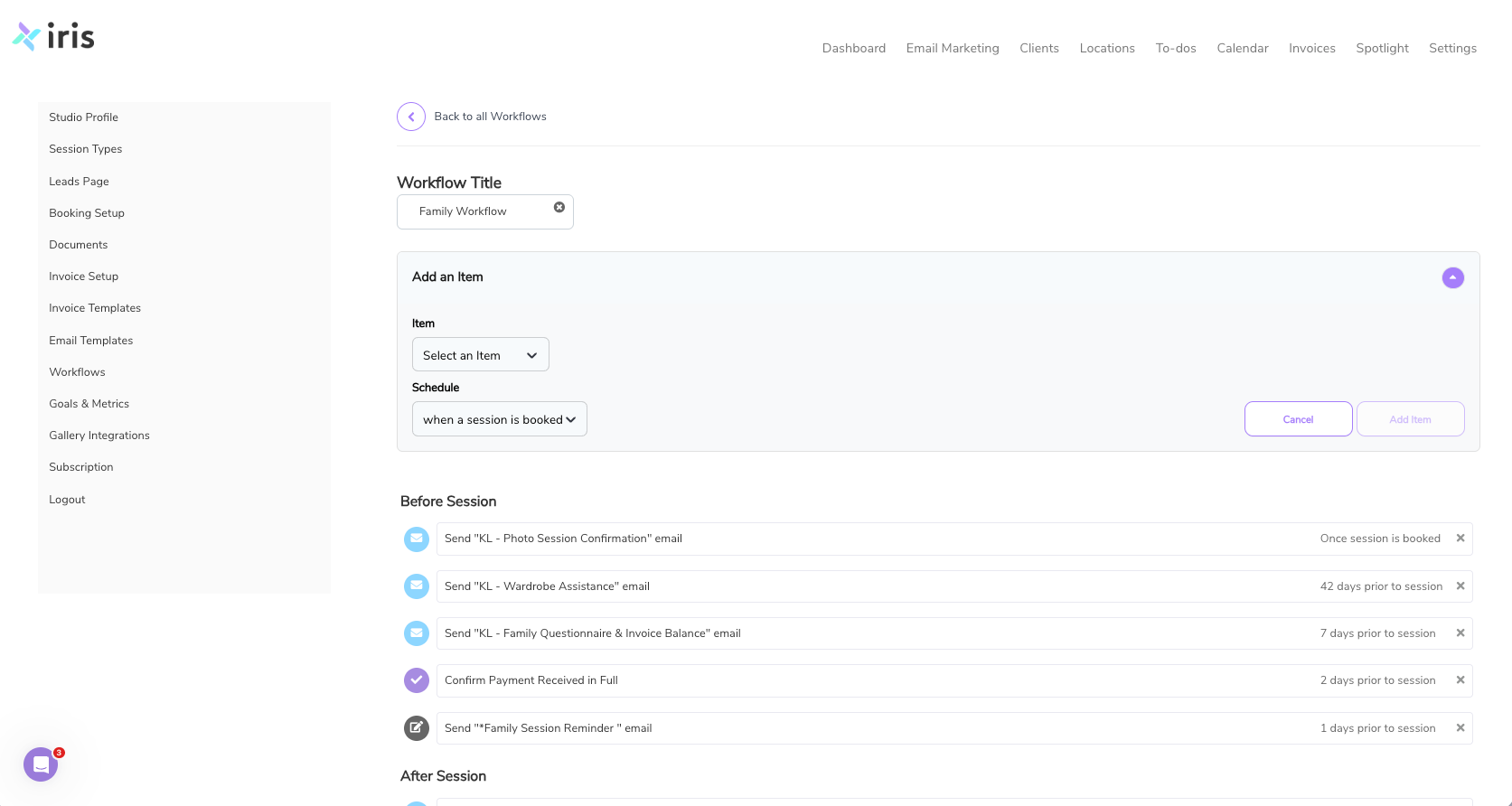
5. Streamline Your Workflow with Iris Works
As a new business owner, you'll be juggling many tasks beyond just photography, such as booking clients, managing schedules, and handling communications. This is where Iris Works can make your life so much easier. Our intuitive CRM platform helps you:
- Streamline bookings and client communications
- Organize your schedule and client information in one place
- Automate administrative tasks so you can focus on what you do best, capturing stunning photos
With Iris Works, you'll save time and reduce stress while learning how to start a photography business. This will make it easier to run your business smoothly, especially in the early days when you are still figuring out how everything fits together.
6. Market Your Photography Business
Once you have your business up and running, it's time to spread the word. Marketing is essential to attracting your ideal clients. Here are some marketing tips to help you get noticed:
- Networking: Build relationships with other photographers and local creatives. Attend networking events, collaborate on shoots, and build a supportive community.
- Online Presence: Create a professional website and optimize it for search engines (SEO). A well-designed website with a clean portfolio is essential for attracting clients.
- Social Media: Utilize platforms like Instagram, Pinterest, and Facebook to showcase your work and engage with your audience. Post regularly, share behind-the-scenes content, and use hashtags to increase visibility.
- Collaborations and Referrals: Word-of-mouth and referrals are powerful in the photography industry. Partner with other businesses or influencers to cross-promote your services.
By networking and using digital marketing strategies, you can build a strong reputation and attract your dream clients. Consistency tends to matter more than volume, a steady presence over time builds more trust than an occasional burst of activity.
7. Keep Learning and Growing
The photography industry is constantly evolving, with new techniques, trends, and technologies emerging all the time. To stay competitive, it's important to invest in continuous learning. Here's how you can keep growing:
- Workshops and Classes: Attend photography workshops and online courses to hone your technical skills.
- Experiment: Try new photography styles or editing techniques to keep your work fresh and exciting.
- Seek Feedback: Ask for constructive feedback from peers or mentors to identify areas for improvement.
The more you grow and evolve as a photographer, the better equipped you'll be to take your business to the next level. Growth does not need to be dramatic, small, consistent improvements add up significantly over a year or two.
8. Patience and Perseverance
Starting a photography business takes time, effort, and a lot of patience. While learning how to start a photography business it’s normal to face challenges along the way, but with dedication and perseverance, you can turn your passion into a successful and fulfilling career.
Be patient with yourself as you navigate the ups and downs of entrepreneurship, and remember—every step forward is progress.
Let Iris Works Be Your Partner in Success
Figuring out how to start a photography business can feel overwhelming at times, but with the right tools and support, you can make your dreams a reality. Iris Works is here to help you every step of the way—from organizing your workflow to marketing your services. Together, we can create a business that not only reflects your creative vision but also sets you on the path to long-term success.
Are you ready to turn your passion for photography into a thriving business? Let’s get started today!
Frequently Asked Questions
How does Iris Works help a new photographer manage bookings and client communication?
Iris Works allows new business owners to streamline bookings and communication in one place, so clients can schedule sessions and stay informed without the photographer manually coordinating every step.
Can Iris Works help organize client information as I start taking on new clients?
Yes. Iris Works keeps client and schedule information organized in one central place, which is especially helpful for a new photographer who is still building their systems from scratch.
Does Iris Works help automate administrative tasks for a new photography business?
Yes. Iris Works can automate parts of the booking and communication process once a session is scheduled, freeing up time for a new photographer to focus on shooting and building their portfolio.
Is Iris Works useful for photographers who are still defining their niche and services?
Yes. Iris Works can be set up to reflect whatever services and session types a photographer chooses to offer, making it flexible enough to grow alongside a business that is still finding its focus.
Can Iris Works support marketing efforts as I try to attract my first clients?
Yes. Iris Works includes tools that support outreach to potential and past clients, helping new photographers stay organized as they begin building a client base.
Recent posts