

Business Automation Often Gets a Bad Reputation Among Photographers
Business automation often gets a bad reputation among photographers. Many worry that automating parts of their workflow will make them feel distant or cold. In reality, automation is one of the most professional things you can implement. When used thoughtfully, it supports both you and your clients.
The concern is understandable. Photography is an inherently personal business. You're invited into people's most significant moments: their weddings, their family milestones, their brand stories. The relationship between photographer and client is built on trust and human connection, and anything that seems to reduce that feels like a threat to what makes the work meaningful.
But the concern conflates two different things: the experience of being cared for and the mechanism that delivers it. Clients don't feel connected to you because you typed an email manually. They feel connected because the communication was warm, timely, and relevant. Automation can deliver all three of those things consistently, across every client, regardless of how busy the calendar is. What it eliminates isn't the personal touch. It's the gaps.
Clients Value Reliability More Than Constant Contact
Most clients care less about how messages are sent and more about when they receive them. A confirmation that arrives within minutes of booking feels reassuring and professional. The same confirmation arriving two days later, even if it's more personally written, feels like an afterthought. The delay communicates something the photographer didn't intend: that this client wasn't the priority.
Consistency builds trust in a way that intermittent personal attention simply can't. When every client receives the same quality of communication at the same stages of the process, the experience stops depending on whether the photographer had a light day or a heavy one. It stops depending on whether the follow-up email got pushed to tomorrow, and then the day after that.
Automation ensures clients are never left wondering what comes next. That certainty, knowing a confirmation is coming, knowing a reminder will arrive, knowing the process is moving forward, makes the experience feel smooth. Smooth experiences feel professional. Professional experiences build the kind of confidence that converts inquiries into bookings and first-time clients into returning ones.
Automation Reduces Human Error
When everything relies on memory, things get missed. Not because photographers are careless, but because human memory is fallible under the weight of a full schedule. A follow-up email gets mentally filed under "do later" and stays there. A contract that needed to go out today gets pushed to tomorrow. A session reminder that should have been sent two days ago gets sent the morning of, or not at all.
Clients often interpret these gaps as disorganization, not as a busy photographer who meant to follow up. The interpretation isn't entirely fair, but it's completely understandable.
When communication is inconsistent, it raises questions about whether the shoot itself will be handled with the same inconsistency. That perception, once formed, is hard to reverse.
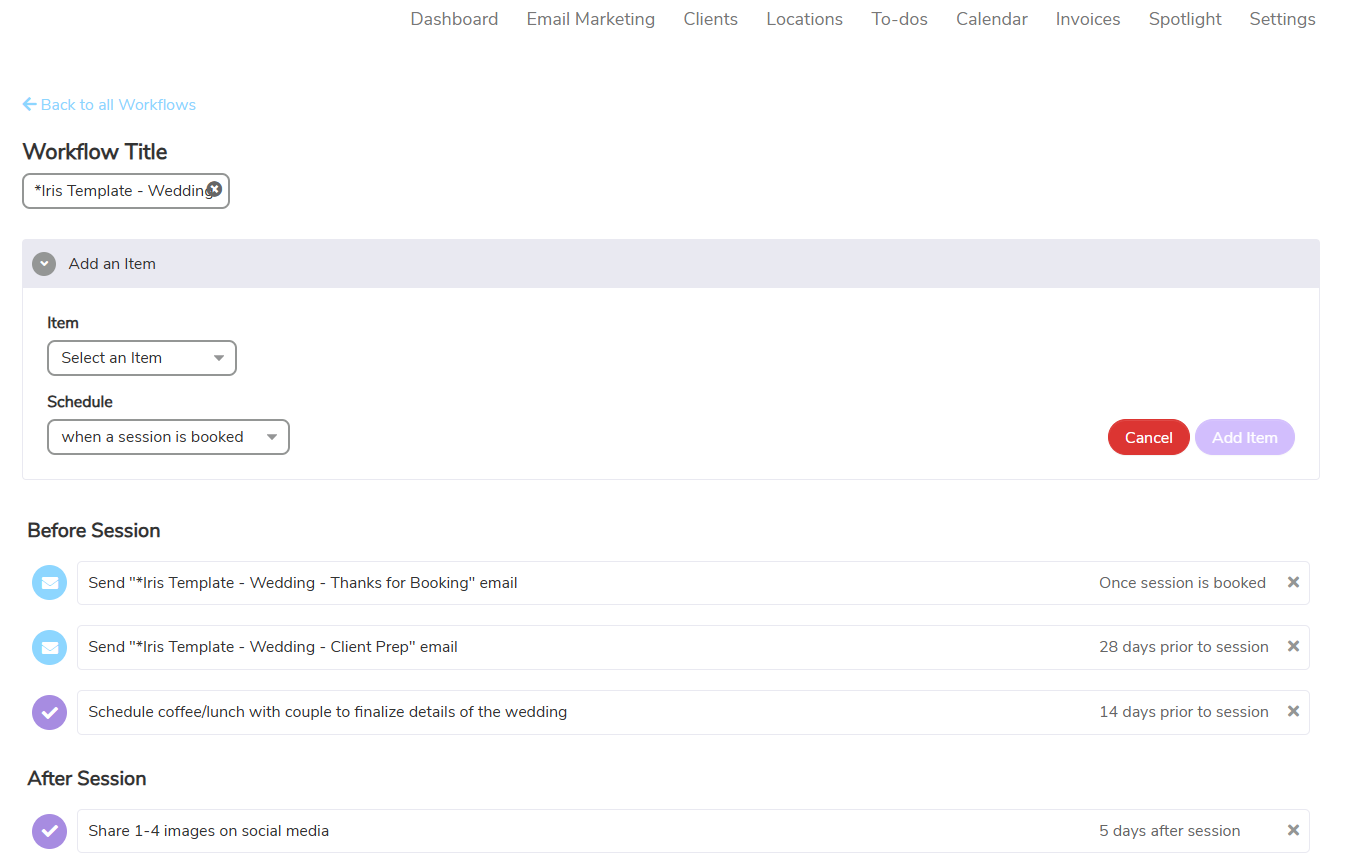
Business automation removes the guesswork entirely. Important steps happen automatically, triggered by the right conditions at the right time. The contract goes out when a booking is confirmed. The reminder lands two days before the session. The gallery notification arrives the moment delivery is complete. Clients receive information on time, every time, because the system doesn't forget. Reliability replaces the stress of trying to keep everything in your head.
Automation Supports, It Doesn’t Replace, You
The most important thing to understand about automation is what it's actually doing. It handles the predictable, repeatable steps so that you're available, mentally and emotionally, for the moments that genuinely require a human. The consultation where a client needs to feel heard. The shoot day where your full presence matters. The difficult conversation that requires sensitivity and judgment. These are the interactions where personal attention makes a real difference, and they're also the interactions that suffer most when a photographer is stretched thin by administrative demands.
When routine tasks are handled automatically, there's more energy left for meaningful interactions. That balance improves the client experience in ways that no amount of manually sent emails can replicate. Clients still feel cared for because the process feels intentional. Intentional systems feel thoughtful. Thoughtful experiences feel personal, even when the mechanism behind them is automated.
The automation is the infrastructure. You're still the relationship.
How Iris Works Supports Business Automation
Using Iris Works, photographers can automate key parts of their workflow without sacrificing the warmth that defines great client relationships. Emails go out in your voice, written the way you'd write them, timed to land exactly when they're most needed. Contracts and invoices follow immediately when a booking is confirmed. Pre-session prep and post-shoot follow-ups run on schedule without any manual trigger.
The system works quietly in the background. Clients never feel ignored or rushed. They feel guided and supported through a process that clearly has their experience in mind. They don't know which touchpoints were automated and which weren't. They just know the experience felt smooth and professional from start to finish. That is professionalism in action: not the impression of effort, but the reality of a well-run process.
Why Automation Strengthens Your Brand
The way a business operates communicates something about what it values. A photography studio with a disorganized, inconsistent client process, however talented the photographer, signals that the experience might be similarly inconsistent. A studio with a polished, reliable process signals the opposite: that this is a business that takes its work seriously and respects the client's time and investment.
Professional systems reflect a professional business. Clients trust businesses that feel organized, because organization suggests care, preparation, and follow-through. That trust translates directly into booking confidence, the feeling that handing over a significant investment is safe.
When business automation is used intentionally, it elevates every part of the experience. Clients feel reassured at every stage rather than uncertain. Photographers feel calmer because nothing is falling through the cracks. The creative work benefits because it's happening alongside a system that supports it rather than despite an administrative burden that undermines it. Everyone benefits, and the brand becomes defined by the consistency of the experience it delivers, not just the quality of the images it produces.
Frequently Asked Questions
Won't clients be able to tell when an email is automated?
Not if it's written well. What clients notice is whether communication feels relevant, warm, and timely, not whether a human pressed send. An automated email that sounds like you, addresses exactly what the client needs at that stage, and arrives right on time will feel more personal than a manually written one that's delayed or incomplete. The craft of the message matters far more than its delivery mechanism.
What's the real difference between a personal email and an automated one?
In terms of content and tone, nothing, if the automation is set up thoughtfully. The difference is in the delivery. An automated email goes out consistently, on schedule, for every client, regardless of how busy or distracted the photographer is that day. A manual email depends on someone remembering to send it, having the bandwidth to write it, and doing so before a gap in communication creates unnecessary uncertainty. Automation is the more reliable version of the same intention.
Does automating client communication mean I stop reaching out personally?
No. Automation handles the predictable, expected touchpoints: confirmations, reminders, prep guides, follow-ups. Personal outreach still happens for the moments that call for it, like a meaningful check-in before a difficult shoot, a response to a specific concern, or a genuine thank-you that goes beyond the standard template. Automation frees up the attention and energy for those personal moments by taking the routine ones off your plate.
How can an automated email feel thoughtful?
Thoughtfulness in communication comes from relevance, timing, and tone, not from the act of manually typing. An automated pre-session email that addresses exactly what the client should expect, what to prepare, and what happens next demonstrates that you've anticipated their needs. That's thoughtful. A generic email sent manually is not. The automation reflects the care you put into designing the experience, and the client receives that care regardless of how it was delivered.
What types of errors does automation actually prevent?
The most common ones are forgotten follow-ups, delayed contracts, missed reminders, and inconsistent information across clients. These aren't the result of carelessness. They're the natural consequence of relying on memory to manage a high volume of client relationships simultaneously. Automation removes the human memory requirement from the equation, which means these gaps simply stop happening. Every client moves through the same process on the same timeline.
Will using automation make my business feel less like me?
Only if the content doesn't sound like you. The templates and workflows that drive automation are entirely within your control. You write them, you set the tone, you decide what information to include and how to present it. Done well, automation actually makes your brand voice more consistent, not less, because every client hears the same version of it rather than a version that varies depending on the day.
How does a more organized process affect client referrals?
Significantly. Clients refer photographers they trust, and trust is built through consistent, professional experiences at every stage, not just during the shoot itself. When the communication is reliable, the contracts are clear, the payments are simple, and the follow-up feels attentive, clients leave the experience with the sense that working with you was easy and worth it. That's the kind of experience people describe when they recommend someone. Automation is what makes that experience consistent enough to replicate across every client relationship.
Recent posts