


Your Booking Experience Begins Before They Book
Your booking experience begins the moment a client lands on your scheduling page. Before they look at availability, they are scanning for reassurance. They want to know if you feel professional and prepared. Those impressions influence whether they continue.
This happens fast, often before a client consciously registers it. A page that feels organized signals that the rest of the experience will be organized too. A page that feels rushed or unclear raises a quiet question in the client's mind: if this part feels uncertain, will the whole process feel this way?
Clarity Comes Before Scheduling
Clients want to understand what they are booking. If session details are unclear, hesitation begins. A clear booking experience helps clients feel oriented. Orientation builds confidence.
Think about what a client sees before they ever touch a calendar. Do they know what the session includes? Do they know how long it runs, what to expect, and what it costs? If those answers are buried, missing, or scattered across different pages, clients are left to guess. Guessing feels risky, and risk slows people down.
Confusion slows decision-making. Clients do not want to guess. When information is presented clearly, they move forward more easily. Clear processes feel safe. A client who understands exactly what they are choosing does not need to pause and second-guess. They simply move to the next step.
Visual Design Signals Professionalism
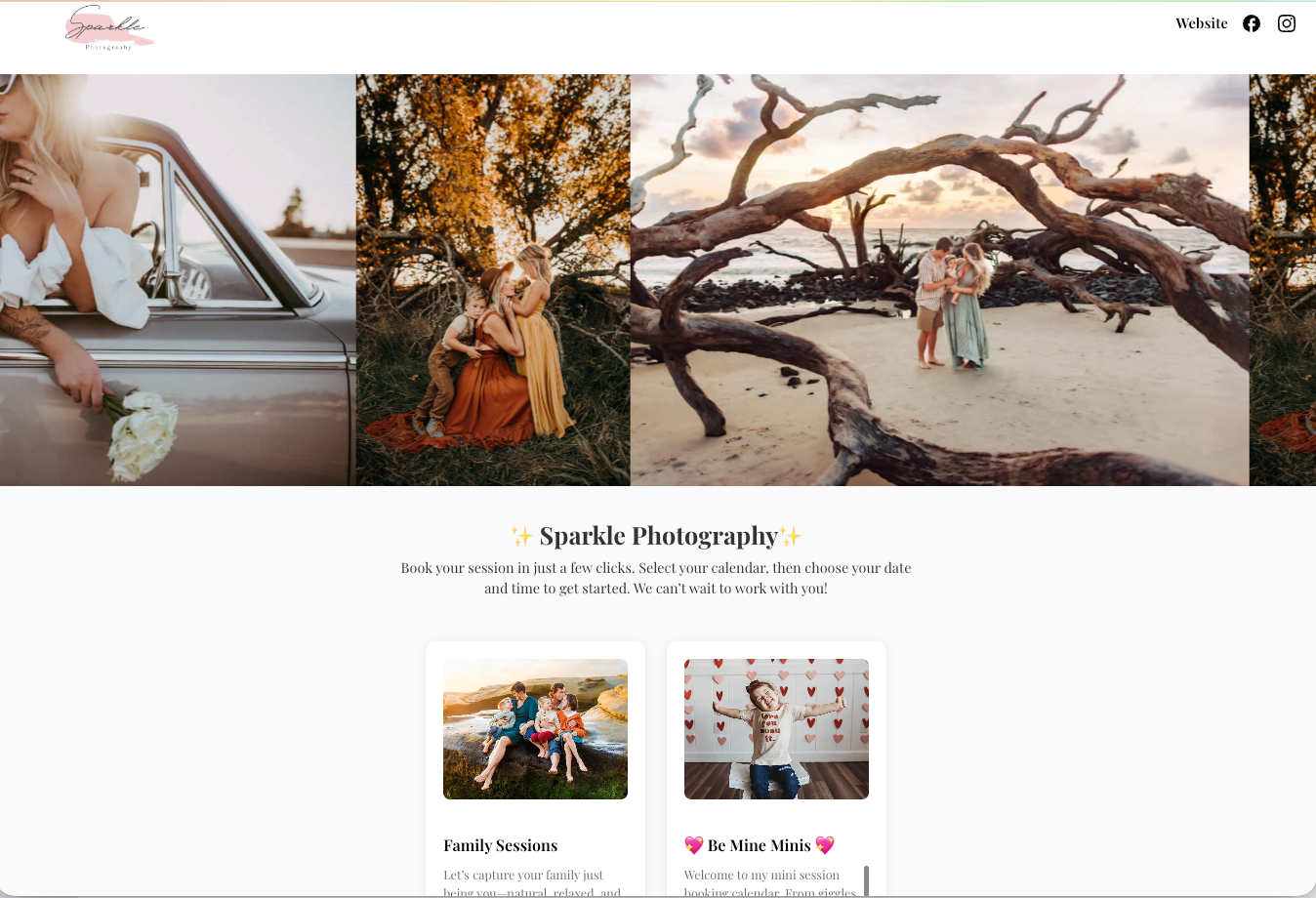
Clients immediately notice visual presentation. Clean layouts and consistent branding build trust. When a page feels generic, confidence drops. Visual design communicates reliability, often before a single word is read.
This does not mean every photographer needs an elaborate design budget. It means the page should feel like it belongs to your business specifically, not like a generic template no one customized. Small inconsistencies, mismatched fonts, clashing colors, low quality images, chip away at trust even when clients cannot name exactly why something feels off.
Your booking experience should feel intentional. Fonts, colors, and imagery should feel aligned. Visual consistency reassures clients. Reassurance leads to follow through. When everything looks like it was chosen on purpose, clients relax into the process instead of quietly evaluating whether they picked the right photographer.
Language Shapes Perception
Wording matters more than photographers often realize. Clear service names and friendly explanations help clients feel supported. Vague language creates friction. Friction leads to hesitation.
A session called "Package B" tells a client nothing. A session described with a clear name and a short, plain-language explanation of what it includes tells them everything they need to decide. The difference in words is small. The difference in confidence is not.
Clients want to know what happens after booking. When expectations are explained, anxiety decreases. Lower anxiety increases conversion. Language sets the tone for the entire relationship, not just the booking page. A warm, clear voice at this stage tells clients they are dealing with someone thoughtful and easy to work with.
Flow Builds Confidence
A rushed booking experience feels transactional. Clients prefer a guided flow. Introducing the service before scheduling feels respectful. Guidance builds trust.
When clients are dropped straight into a calendar with no context, they are forced to make a scheduling decision before they have made a service decision. That order feels backwards. It asks clients to commit to a time before they fully understand what they are committing to.
Flow also impacts ease. When steps feel logical, clients relax. Relaxed clients complete bookings. Calm experiences convert better than fast ones. A booking experience that moves clients from understanding, to choosing, to scheduling, to confirming feels natural because it mirrors how people actually make decisions.
Setting Expectations Early
Clients want to know what comes next. Contracts, payments, and confirmations should be clearly communicated. Uncertainty stops momentum. Clear expectations keep clients moving.
This is where many booking experiences quietly break down. A client books a date, then is left wondering when the contract will arrive, how payment works, or whether they need to do anything else. That silence creates room for doubt, and doubt is exactly what a good booking experience is designed to prevent.
Setting expectations benefits photographers too. Clients arrive prepared. Follow up questions decrease. Time is saved on both sides. When the path forward is spelled out clearly from the start, photographers spend less time answering the same questions over and over.
How Iris Works Improves the Booking Experience
Using Iris Works, photographers can create a booking experience that feels structured and thoughtful. Services are introduced before scheduling. Clients feel informed before committing. Confidence builds naturally because the process itself is doing the reassuring, not just the photographer's follow up emails.
Booking, contracts, and payments happen in one flow. Clients complete everything in one place without needing to jump between tools or wait on separate emails. This reduces friction and drop off. A connected experience feels professional because it is professional, every step reinforces the one before it.
Why This Matters Beyond Booking
A strong booking experience sets the tone for the entire relationship. Clients who book confidently show up prepared. Expectations are aligned early. This leads to better sessions, because clients arrive already comfortable rather than still working through uncertainty.
Investing in the booking experience improves quality and consistency. Booking becomes a strength instead of a weak point. First impressions shape everything that follows, and a clear, guided booking process is one of the most reliable ways to make that first impression count.
Frequently Asked Questions
How does Iris Works help clients understand what they are booking before they see a calendar?
Iris Works allows photographers to present services with clear names and descriptions before a client ever reaches the scheduling step. Clients see what a session includes first, then choose a time. This removes the guesswork that causes hesitation on a booking page.
Can Iris Works help make my booking page feel more consistent with my brand?
Yes. Iris Works lets photographers customize their booking page so it reflects their own branding rather than feeling like a generic scheduling tool. A consistent look reassures clients that they are working with an established, professional business.
Does Iris Works help clients know what happens after they book a session?
Yes. Iris Works can send an automated email after a client books that includes next steps along with the contract and invoice. Clients do not have to wonder what comes next or reach out to ask.
How does Iris Works keep contracts and payments from feeling disconnected from the booking process?
With Iris Works, the contract and invoice can be sent directly through the platform as part of the same client email that follows booking. Clients can review, sign, and pay without switching tools or waiting on separate messages.
Can Iris Works help reduce the number of questions clients ask after booking?
Yes. Because Iris Works allows photographers to communicate service details, contracts, and payment expectations clearly and automatically, clients arrive at their session with fewer unanswered questions, which saves time for both the client and the photographer.
Does Iris Works support a guided flow instead of dropping clients straight into a calendar?
Yes. Iris Works allows photographers to structure their booking page so services are introduced before scheduling. This guided order helps clients feel oriented and confident before they choose a date.
Recent posts