

Booking Abandonment Happens More Often Than Photographers Realize
Booking abandonment happens more often than photographers realize. A client may seem interested, click through your booking page, and then disappear without explanation. This is rarely about price or lack of interest. More often, it comes down to hesitation, and hesitation is almost always caused by something in the experience rather than something in the client.
The challenge is that clients who abandon a booking page almost never explain why. They do not send a message saying the process felt confusing or the next step was unclear. They simply leave, and the photographer is left wondering what went wrong. Without that feedback, the same friction keeps repeating across every future client who hits the same point and stops.

Most Clients Don’t Leave Because They’re “Not Ready”
Clients usually abandon booking pages because something feels unclear, not because they have decided against booking. They may not fully understand what happens next. They might worry about making the wrong choice between session types. They may have had a question that the page did not answer and felt uncertain about whether to proceed without the answer.
When uncertainty appears, clients pause. That pause is where most bookings are actually lost. Pauses give doubt time to grow, and doubt turns into inaction. Inaction looks like abandonment from the outside, but it rarely started as a decision to leave. It started as a moment of hesitation that was never resolved.
Uncertainty Is the Biggest Booking Killer
Before committing to a photography session, clients are asking themselves a quiet question: will this experience be easy or stressful? If the booking page feels abrupt, skips over important context, or asks the client to make decisions without enough information, the answer to that question starts to feel uncertain. Uncertainty increases anxiety. Anxiety slows decisions.
Small moments of friction add up quickly. A missing explanation, an unclear step, or a form that asks for information without explaining why can each stop momentum on their own. Together they create an experience that feels harder than it should be. Clients often leave silently rather than asking questions, not because they are not interested, but because asking feels like more effort than moving on.
Clients Fear Making the Wrong Decision
Booking a photography session feels personal. Clients are investing real money in an experience that matters to them, and they want to feel certain they are choosing correctly. If they are unsure about which session type fits their needs, or unclear about what is included, or uncertain about what happens after they complete the booking, they hesitate. Hesitation, when it is not resolved quickly, leads to leaving the page.
Clients want to feel guided through that decision rather than left to make it alone. They want confirmation that they are doing the right thing at each step. When that guidance is absent, confidence drops, and confidence is what makes booking feel like a natural next step rather than a risk.
Overwhelm Pushes Clients Away
Too many options presented without context create a different kind of friction. When clients are asked to choose between multiple session types, add-ons, or scheduling windows without enough information to evaluate them, the decision starts to feel paralyzing. Stress increases. Stressed clients do not convert. They leave and tell themselves they will think about it later.
A booking page should reduce the mental effort required to move forward, not increase it. Clients want clarity, not complexity. When choices feel manageable and each option comes with enough context to make a confident decision, action feels possible. When choices feel overwhelming, leaving feels easier.
How Iris Works Reduces Booking Abandonment
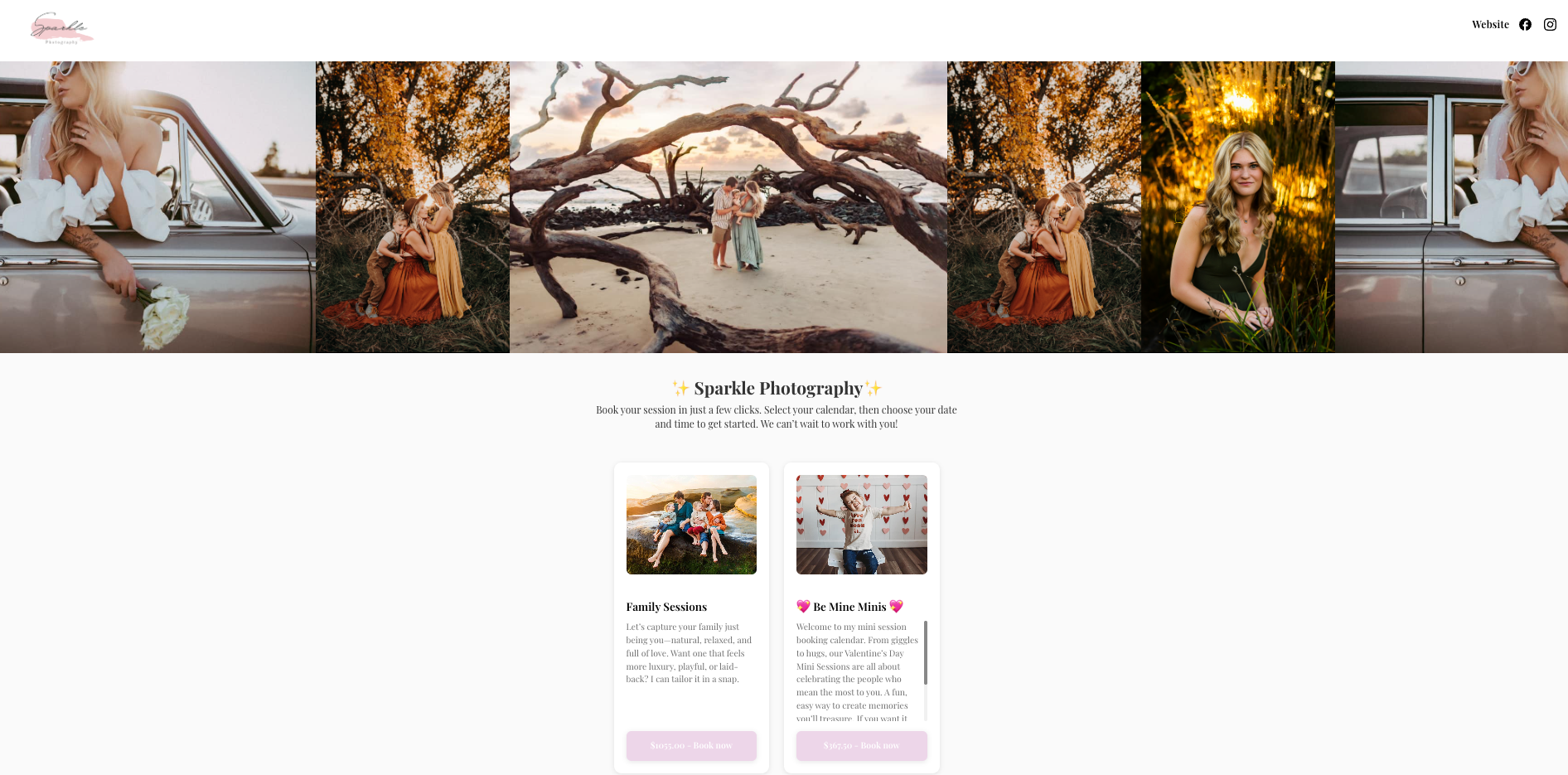
Using Iris Works, photographers can guide clients through the booking process in a way that feels intentional rather than abrupt. The booking calendar presents availability clearly so clients can choose a session time without confusion about what is available or what they are selecting. Services are introduced in a logical order so clients understand what they are booking before they are asked to commit to a date.
Once a session is scheduled, photographers can send an email through Iris Works that includes a contract and invoice, allowing clients to sign and pay in one place. That connected experience prevents the drop-off that commonly happens when clients are asked to navigate between separate tools or wait for additional steps to arrive. Each part of the process follows naturally from the last, which is what keeps clients moving forward rather than stopping to reconsider.
When clients feel supported at every step, hesitation has less room to take hold. Clear steps create confidence. Confidence reduces abandonment.
Why Reducing Abandonment Changes Everything
Reducing booking abandonment improves conversion without requiring more marketing, more inquiries, or a lower price. The interest already exists. The clients are already there. The experience simply needs to support the decision they were already moving toward.
Small improvements to the booking experience create results that compound over time. Every client who completes the process instead of abandoning it is a session booked, a relationship started, and a potential referral gained. When clients feel calm and confident moving through the booking process, booking becomes a natural next step rather than a hurdle. Confidence turns interest into action, and action is where growth actually happens.
Frequently Asked Questions
How does Iris Works help prevent clients from abandoning the booking process midway through?
Iris Works structures the booking experience so clients are guided through each step rather than left to navigate it on their own. The booking calendar presents availability clearly, and the follow-up email with a contract and invoice keeps the process moving in one connected flow. When each step leads naturally into the next, clients have fewer reasons to pause and reconsider.
Does Iris Works help photographers present their services clearly before clients choose a date?
Yes. The booking process in Iris Works is designed so clients can understand what they are booking before they are asked to commit to a time. That sequencing reduces the uncertainty that causes hesitation, because clients arrive at the scheduling step already feeling informed about what they are choosing.
How does Iris Works make the contract and payment step less likely to cause drop-off?
Through Iris Works, photographers can send an email that includes both the contract and the invoice together. Clients can review, sign, and pay without switching between platforms or waiting for a separate step. Keeping those actions in one place removes the friction that commonly causes clients to pause after scheduling and before confirming.
Can Iris Works send an immediate response when a client first inquires, to prevent early abandonment?
Yes. When a new inquiry comes in, Iris Works can trigger an automated response that acknowledges the client and sets expectations for what comes next. That immediate touchpoint prevents the uncertainty that causes early disengagement, reassuring the client that the process is moving forward before doubt has a chance to develop.
How does the Iris Works booking calendar reduce confusion for clients?
The Iris Works booking calendar shows availability directly so clients can choose a session time without back-and-forth emails or uncertainty about what is open. That clarity removes one of the most common decision points where clients stall, replacing a potentially confusing exchange with a single, straightforward action.
Does Iris Works give photographers visibility into where clients are dropping off?
Yes. Iris Works keeps all leads and bookings visible in a centralized dashboard, showing where each client is in the process. That visibility helps photographers identify patterns in where clients are pausing or disengaging, making it easier to address friction points before they affect future bookings.
Recent posts