


A contract is one of the least glamorous parts of a photography business and one of the most important. It is easy to treat contracts as an afterthought, a formality to rush through so you can get to the creative work. But a clear, professional contract is what stands between you and the disputes, cancellations, and misunderstandings that can quietly drain a business.
Contracts protect both sides. They set expectations, define responsibilities, and give everyone a shared understanding of the agreement. For photographers, they are the foundation of a professional relationship and a safeguard when something goes wrong. Treating them seriously is one of the clearest markers of a business that intends to last.
Why Every Session Needs a Contract
Some photographers skip contracts for smaller sessions, assuming they are only necessary for weddings or large jobs. This is a costly assumption. Every session involves money, expectations, and the possibility of things not going as planned. A contract is your protection regardless of the session size.
Without a contract, you are relying on memory and goodwill. That works until it does not. A client cancels last minute and expects a full refund. A dispute arises over how many images were promised. Someone questions who owns the rights to the photos. In each of these situations, a contract is the difference between a clear resolution and a stressful, uncertain conflict.
A contract also communicates professionalism. When a client receives a clear agreement to review and sign, it signals that you run a serious business with defined terms. That impression builds trust and sets the tone for a respectful working relationship.
What a Strong Photography Contract Covers
A good contract does not need to be complicated, but it does need to be thorough. It should clearly define the scope of the work, including what the client is receiving and what they are not. It should address payment terms, deposits, and what happens if a session is canceled or rescheduled.
It should also cover the practical realities of photography. Image usage and copyright, delivery timelines, and how many edited images the client can expect are all common sources of confusion that a contract can prevent. Weather policies, backup plans, and liability considerations round out the picture for many photographers.
The specifics vary by the type of work you do, but the principle is constant. A strong contract removes ambiguity. Every term you define in advance is a potential dispute you avoid later. The goal is that both you and the client know exactly what to expect before the session ever happens.
The Problem With Manual Contracts
Even photographers who use contracts often handle them in ways that create friction. Printing, signing, scanning, and emailing back and forth is slow and clunky. Attaching a document and hoping the client prints, signs, and returns it introduces delays and dropped steps. And keeping track of which contracts are signed and which are still outstanding becomes a headache as your bookings grow.
This manual approach also slows down your booking process. A client who is ready to commit may cool off during the days it takes to handle a cumbersome contract. Every point of friction between interest and commitment is a chance to lose the booking. Contracts should secure the client quickly, not create obstacles.
Then there is organization. When signed contracts live in your email, your downloads folder, and a filing cabinet, finding a specific one later is a chore. If a dispute ever arises, you need to locate the relevant agreement fast, and scattered storage makes that stressful precisely when you can least afford it.
How Iris Works Simplifies Contracts
Iris Works removes the friction from contracts by making them a smooth, digital part of your workflow. Because the platform was built for photographers, contracts are treated as a core piece of the client journey rather than a separate task to manage on the side.
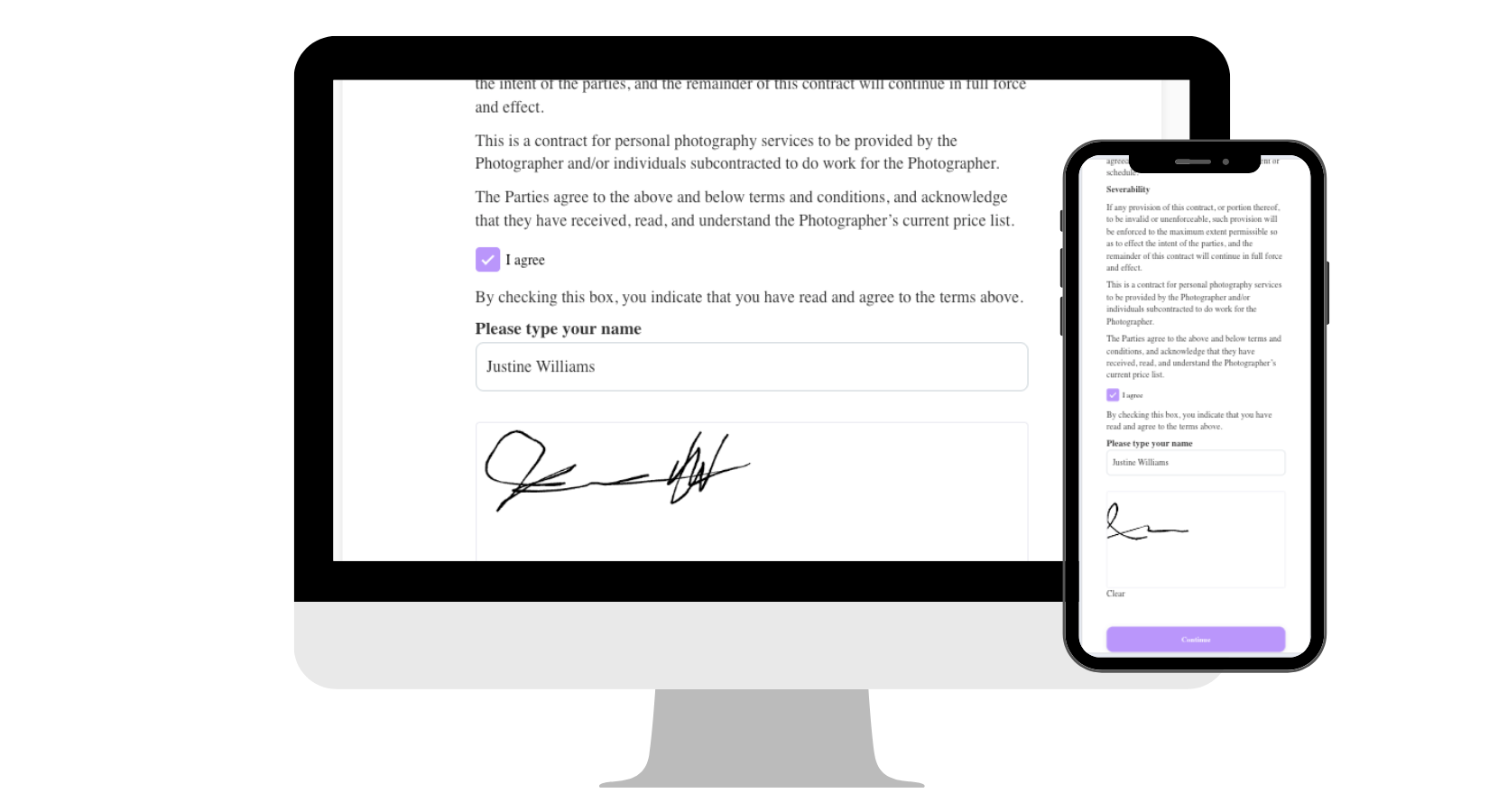
With Iris Works, you can send contracts digitally and let clients sign them online in minutes. There is no printing, scanning, or mailing. The client receives a clear, professional agreement, signs it electronically, and the signed version is stored automatically. That speed keeps your booking process moving while a client's interest is high.
Because contracts live inside the same system as everything else, they stay organized under each client record. You can see at a glance which contracts are signed and which are still pending, and you can find any signed agreement instantly when you need it. That organization turns contracts from a source of stress into a reliable, protected part of your business.
Contracts as Part of Your Workflow
The real advantage comes when contracts are woven into your broader process rather than handled as one off tasks. When a client books, a contract can be part of the sequence that follows, sent automatically as a natural step in onboarding. The client signs, the record updates, and the process moves forward without you chasing anything.
This integration means contracts stop being something you have to remember. They become an automatic checkpoint in the journey from inquiry to session. Every client signs before the work begins, not because you manually enforce it each time, but because your system builds it into the flow.
That reliability protects you consistently. Instead of occasionally forgetting a contract during a busy stretch, you have a process that ensures every session is covered. The protection a contract provides only works if the contract actually gets signed, and a workflow driven approach makes that happen every time.
Peace of Mind Is the Real Payoff
Beyond the legal protection, a solid contract process gives you something harder to measure but just as valuable. It gives you peace of mind. When you know every session is backed by a clear signed agreement, you can work without the nagging worry of what might happen if a client disputes something or cancels unexpectedly.
That confidence changes how you operate. You can enforce your policies without hesitation because they are documented and agreed upon. You can handle difficult situations calmly because the terms are clear. And you can focus on your photography instead of worrying about the what ifs that a good contract has already addressed.
Professionalism, protection, and peace of mind all flow from the same source. Take contracts seriously, make them easy to sign, and keep them organized. When you do, they quietly safeguard your business through every booking.

Reviewing and Updating Your Contracts
A contract is not a document you write once and use forever without a second thought. Your business evolves, the situations you encounter change, and the terms that protected you well last year may have gaps you have since discovered. Building a habit of periodically reviewing your contracts keeps them aligned with how your business actually operates.
Each time you face a tricky client situation, a cancellation, or a misunderstanding, treat it as feedback for your contract. Ask whether clearer terms would have prevented the problem, and if so, update your agreement so the next client relationship is better protected. Over time, this practice turns your contract into a document shaped by real experience rather than guesswork, closing the specific gaps that have caused you trouble.
Keeping your contracts organized in one system makes this ongoing refinement far easier. When your agreements and your client records live together, you can see how your terms play out across many sessions and update your standard contract with confidence. A contract that evolves alongside your business is a far stronger safeguard than one frozen in place, and maintaining it is part of running a professional operation.
Take the Next Step
Contracts are the foundation that protects your photography business, but only if they are clear, signed, and organized. If your current contract process feels slow or scattered, the right system will change that. Use Iris Works to send contracts digitally, collect signatures online, and keep every agreement organized under one client record. Start your free trial and give your business the protection and professionalism that strong, well managed contracts provide.
Frequently Asked Questions
Why do photographers need contracts for every session?
Every session involves money, expectations, and risk. A contract protects both parties by defining terms and preventing disputes, regardless of the session size.
What should a photography contract include?
A strong contract covers scope of work, payment and deposit terms, cancellation policies, image usage and copyright, delivery timelines, and expectations for both sides.
How does Iris Works handle contracts?
Iris Works lets photographers send contracts digitally, collect online signatures, and store signed agreements automatically under each client record.
Can Iris Works tell me which contracts are still unsigned?
Yes. Iris Works shows the status of each contract so you can see which are signed and which are still pending at a glance.
Can contracts be part of my Iris Works workflow?
Yes. Contracts can be built into your onboarding workflow so they are sent automatically as a natural step after a client books.
Recent posts