

Time Automation Is Not About Doing Less
Time automation is not about doing less. It is about creating space for the work that matters most. Many photographers feel stretched thin, not because they lack skill, but because their time is fragmented. Automation helps restore balance.
There's a version of running a photography business that most photographers didn't sign up for: hours spent on emails, chasing invoices, sending reminders, and answering the same questions over and over. None of it is hard, exactly — but it's relentless, and it chips away at the time and mental energy that should be going toward the actual work. The camera sits idle while the inbox fills up.
Automation doesn't eliminate work. It eliminates the category of work that doesn't require you — the repetitive, time-sensitive, predictable tasks that a system can handle just as well, and usually more consistently, than a person juggling a full schedule. What's left is the work that genuinely benefits from your attention, your creativity, and your presence.
Hours Are Often Lost to Small Tasks
Emails, reminders, and follow-ups add up. Each one takes only a few minutes, but those minutes accumulate across a full week, a full month, a full season. And unlike editing or shooting, these tasks don't produce anything that compounds. They just need to be done again tomorrow.
The real cost isn't just the time itself — it's the context switching. Moving between a creative task and an administrative one isn't seamless. It takes mental energy to shift gears, and each interruption makes it harder to get back into the flow state where your best work happens. Fragmented time produces fragmented results.
Removing those tasks frees both mental and physical energy. Energy fuels creativity. When your mind isn't carrying the background weight of "I need to follow up with that client" or "did I send that contract yet," there's more room for the thinking that actually moves your work forward.
Small Automations Add Up Quickly
Automating one task may save minutes. Automating several saves hours. Those hours compound every week. Compounding time changes how your business feels.
It's easy to underestimate the impact of small automations because each one seems modest on its own. An automated inquiry response saves five minutes. An automated session reminder saves another few. A contract that goes out automatically the moment a booking is confirmed saves back-and-forth that might otherwise stretch across two days. But add those up across twenty clients a month and the math becomes significant — hours returned to your schedule every single week, without any ongoing effort on your part.
Less time on admin means more time for clients. More presence — in consultations, during shoots, in the follow-up experience — improves what clients actually feel. Better experiences lead to referrals. The compounding effect isn't just about time. It runs through the entire quality of the business.
Automation Reduces Decision Fatigue
Decision fatigue drains creativity. Constantly deciding what to send, when to send it, and whether you've already sent it adds a low-level stress that accumulates across the day. Automation removes those decisions. Systems decide for you.
This matters more than it might seem. Every decision, no matter how small, draws from the same cognitive reserve. By the time a photographer has spent the morning managing emails and follow-ups, the afternoon shoot requires drawing from a depleted well. The work still gets done, but it costs more than it should.
When decisions are fewer, clarity improves. The mental space that administrative decision-making was occupying becomes available for the decisions that actually require judgment — how to approach a difficult shoot, how to handle a client concern, how to evolve the business. Clarity reduces burnout. Reduced burnout supports longevity. And longevity is what a sustainable photography business actually requires.
Reclaimed Time Improves Quality of Life
Time automation gives you control over your schedule. You are less reactive. You feel more grounded. Grounded photographers show up better — in their work, with their clients, and in their lives outside the business.
This is the part that doesn't always make it into conversations about productivity and systems, but it might be the most important. Running a business that constantly demands your attention isn't just professionally unsustainable — it's personally exhausting. The photographers who build long careers are almost always the ones who figured out how to protect their time and energy before they ran out of both.
Better energy leads to better work. Better work leads to better clients — the kind who value what you do, refer others, and come back. Everything improves when time is protected, not because you're working harder, but because you're working from a place of reserves rather than depletion.

How Iris Works Supports Time Automation
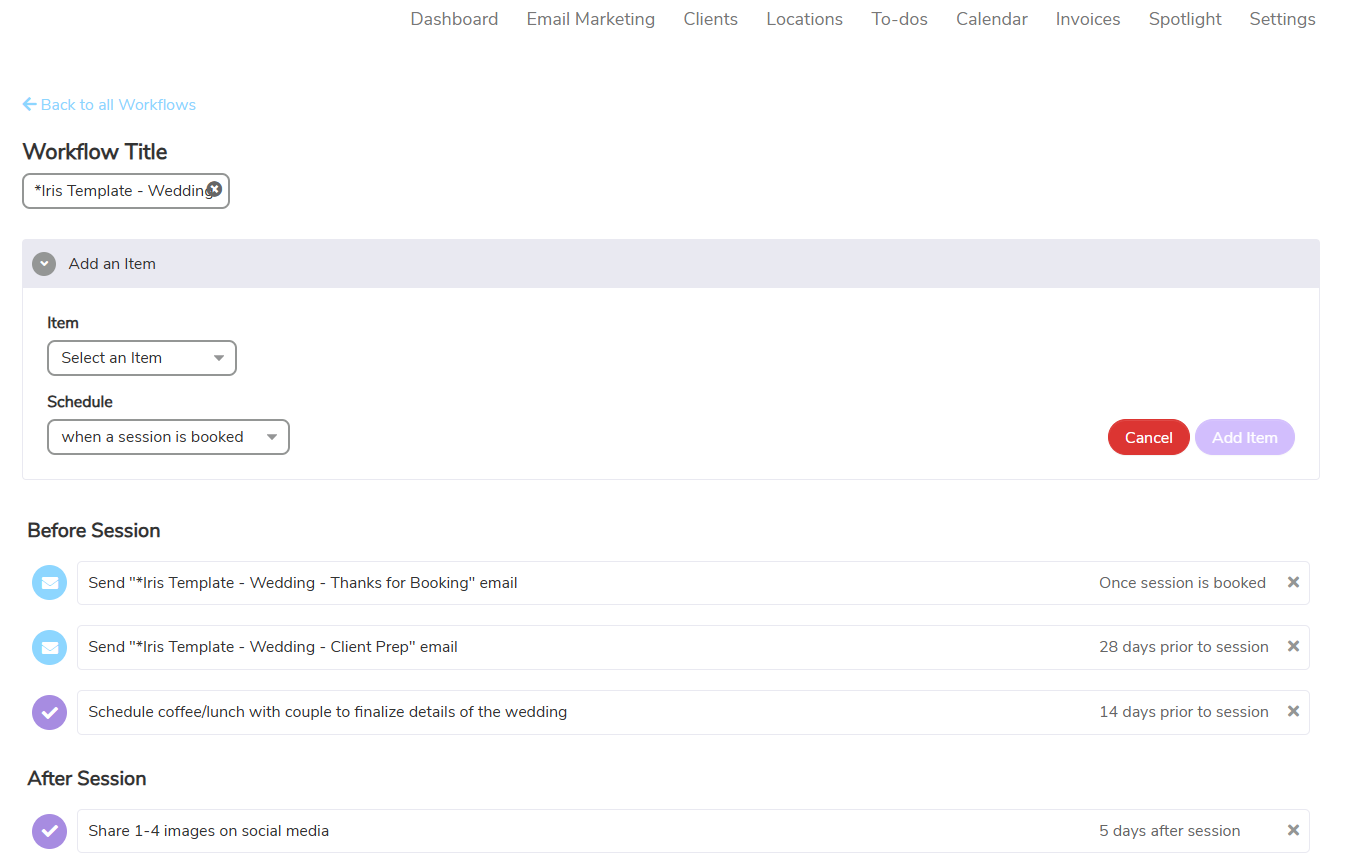
With Iris Works, photographers can automate repetitive tasks across their entire workflow. Inquiry responses, contracts, payment reminders, session prep guides, gallery delivery follow-ups, and review requests all happen automatically, triggered by the right conditions at the right time.
The automation works quietly in the background. Your business keeps moving — clients are guided, communications go out, payments are collected — even when you step away. That freedom matters. It means a weekend off doesn't mean a backlog to return to. It means a busy shoot day doesn't mean a stack of unanswered emails by evening. It means the business functions at a professional level regardless of what else is happening in your life.
Time is reclaimed without effort, which is exactly the point. The system runs so you don't have to.
Why Saving Time Changes Everything
Saving hours every week reduces pressure. Reduced pressure improves creativity. Creativity fuels passion. Passion sustains your business.
That chain of cause and effect is worth tracing all the way through, because it's easy to think of time savings as a practical convenience rather than something that shapes the entire character of a business. But pressure and creativity exist in direct tension. The photographers doing their most inspired work are almost never the ones who are most overwhelmed — they're the ones who have protected enough space to actually think, experiment, and bring something genuine to their work.
Time automation creates breathing room. Breathing room creates confidence — the kind that comes from knowing your business is running well, that clients are being taken care of, and that you're not about to drop something important. Confidence supports growth, better decisions, and the willingness to take the creative risks that keep the work worth doing.
Protecting your time isn't a luxury. It's the foundation everything else is built on.
Frequently Asked Questions
What's the difference between time automation and just doing less work?
Automation removes the tasks that don't require your specific judgment or creativity — the repetitive, time-triggered communications and administrative steps that follow a predictable pattern. It doesn't reduce the quality or quantity of work delivered to clients; it redirects the effort that was going toward routine logistics toward the work that actually benefits from your attention. The output stays the same or improves. The drain decreases.
What kinds of photography business tasks are actually worth automating?
Any task that follows a consistent trigger and doesn't require real-time judgment is a strong candidate. Common examples include: sending a welcome email when a new inquiry comes in, delivering a contract once a booking is confirmed, issuing payment reminders on a set schedule, sending a session prep guide a few days before a shoot, following up with a thank-you after delivery, and requesting a review one to two weeks later. These happen identically for every client, which makes them ideal for automation.
How does decision fatigue actually affect creative work?
Every decision — including small administrative ones like what to send and when — draws from the same cognitive reserve. When that reserve is depleted by a morning of inbox management, the afternoon shoot or editing session starts from a deficit. The work still gets done, but it costs more mental energy than it should, and the results often reflect that. Automation reduces the volume of small decisions, which preserves more of that reserve for the decisions that genuinely need it.
Will automated messages feel impersonal to clients?
Not if the content is written thoughtfully. Automation handles the timing and delivery — the part clients never see. What they receive is a message that sounds like you, arrives exactly when it should, and addresses exactly what they need at that stage of the process. In practice, automation often feels more personal than manual outreach, because it's consistent and timely rather than dependent on how busy you happen to be that day.
How much time can automation realistically save in a photography business?
It varies by volume, but the compounding effect adds up faster than most photographers expect. A handful of automated touchpoints across a typical client journey — inquiry response, booking confirmation, pre-session reminder, post-session follow-up, review request — can save anywhere from thirty minutes to a few hours per client when you account for the back-and-forth they replace. At twenty clients a month, that's a meaningful return every single week, with no ongoing effort required.
Does automation work for different types of photography, or is it mainly for weddings?
The specifics of the workflow vary, but the principle applies across every photography niche. Portrait, commercial, corporate, family, real estate — any business with recurring client touchpoints benefits from automating them. The triggers and content of the automated messages will look different for a headshot studio than for a wedding photographer, but the outcome is the same: a consistent, professional experience for every client without requiring manual effort each time.
What's the first automation a photographer should set up?
The inquiry response is usually the highest-leverage starting point. It's the touchpoint where speed matters most — clients who inquire often reach out to multiple photographers, and a fast, polished response creates a strong first impression while others are still drafting replies. An automated response that acknowledges the inquiry, shares relevant information, and provides a clear next step can be set up once and run indefinitely, protecting one of the most valuable moments in the client journey every single time.
Recent posts